
How to Throw a Parade
I fix another marquee urban event

A lot of photos in this one so view in your browser or the app as the email may be cut-off.
I swear this is not strictly speaking another Knicks post, but our starting point is the Knicks’ championship parade last week, a parade that a little less than 1/4 of the city’s population was estimated to attend, and the only time I’ve felt genuinely unsafe in a crowd. As I stood at 5 am in an increasingly severe crush of people, a man fainting in front of me, my prospects of actually getting into the parade slim to none, it was sort of impossible not to think — how could this be better?
Parades are a huge part of civic life. New York has parades associated with major holidays, the Thanksgiving and Saint Patrick’s Day Parades, and others celebrating various groups, such as the Puerto Rican Day Parade, Pride, or the West Indian Day Parade. I have been in Sevilla for Holy Week, when the churches hoist wooden altars with statues of Mary and the saints around the city, accompanied by brass bands and colorful uniforms, and in London during Remembrance Day for a solemn procession of veterans. These events create mass visibility (we’re here! look at us!) and an excuse for pageantry for everything from the religious to the secular to the deeply personal. For a few hundred dollars, you can throw your own parade for pretty much any reason in New Orleans, complete with a second-line band and police escort. Parades also have the power of distilling entire groups and causes into their fundamental, exaggerated essence. You are Borinquen or Irish-American year-round, but never more so than at the parade.
Seeing as Street Stack has already fixed Fashion Week and the Paris Olympics, I figure, why not take a crack at fixing the biggest parade in New York City history?
The Problem
First, a brief description of what actually happened so we can understand what we’re improving upon. The City decided to give the Knicks a parade down the “Canyon of Heroes” — the stretch of Broadway going from the Battery to City Hall that has traditionally hosted victorious sports teams (a lot of Yankees), dignitaries, and national heroes like John Glenn and Dwight Eisenhower. The parade would end outside City Hall, where the Mayor would honor the team in a closed-off ceremony.
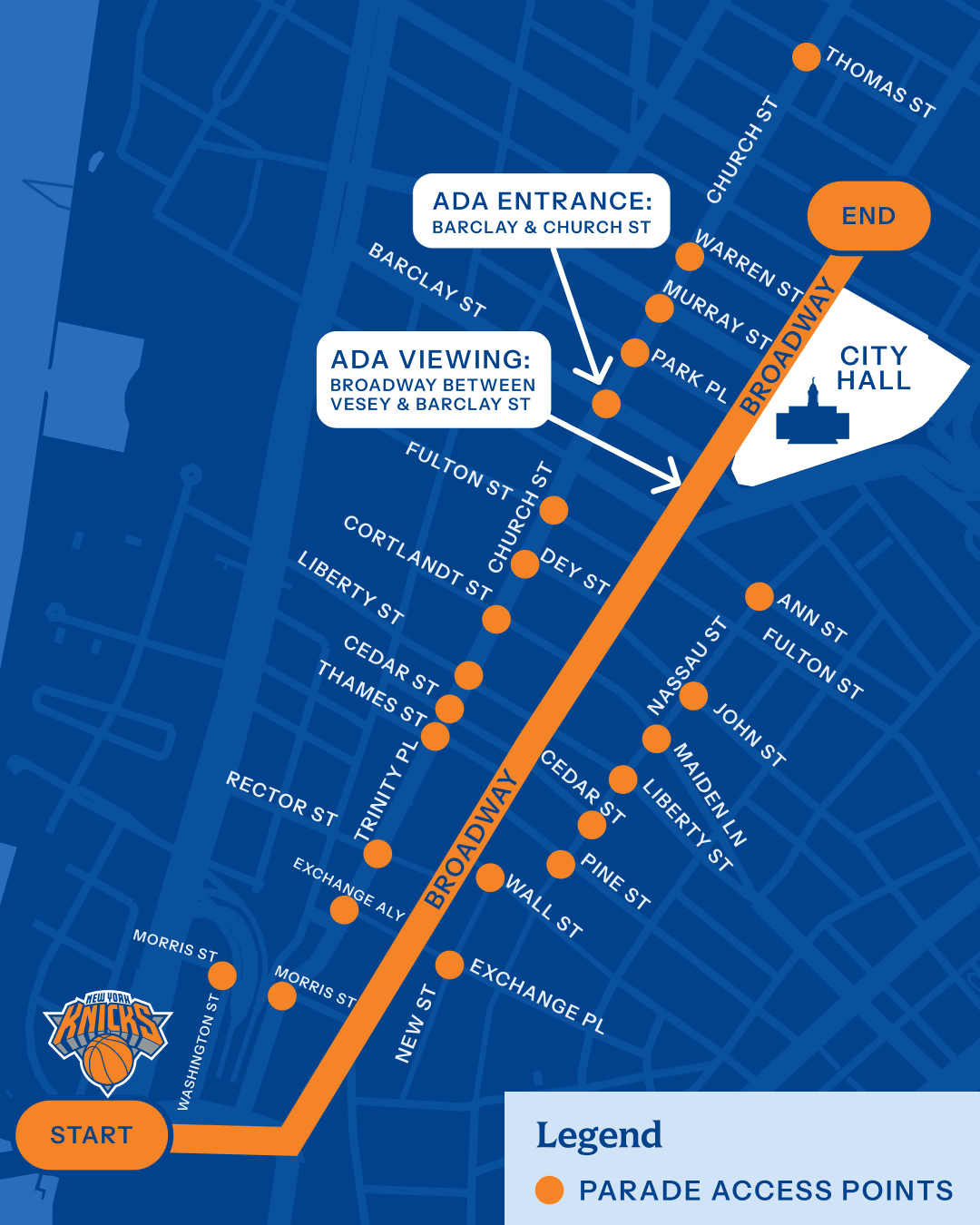
This route is short, less than a mile total, and it is also quite claustrophobic. The street pattern of the financial district where the parade would occur is left over from the Dutch and English colonies, a time before cars, before hundreds of thousands of people lived or worked in the area, and certainly before the Knicks (although maybe not before Knickerbockers). The City grafted its biggest-ever event onto some of its narrowest streets. The championship team would cruise down Broadway, which mostly has 15-foot-wide sidewalks, giving about 30 feet of pedestrian space along the route. The NYPD also closed the intersecting streets one block in either direction of Broadway to create security checkpoints. These blocks, Maiden Lane, John Street, Pine, etc, are incredibly narrow, 40 feet wide or less. In contrast, 5th Avenue, where the Saint Patrick’s Day parade takes place, has 20-foot-wide sidewalks, and its intersecting blocks are ~60 feet wide. While I’m generally a fan of narrow streets, short route + narrow street = not a lot of people getting to see the show. The NYPD also made no attempt to set up any sort of lines or manage the access points beyond placing barricades horizontally across the street, leading to some seriously unsafe moments, as people pushed (or got pushed) into the horizontal barricades. Might I suggest a “Disney queue” next time?
The other issue was ending the parade at City Hall for speeches and a ceremonial presentation of the keys to the city. The parade is technically thrown by the City in honor of the team, with the Mayor standing in as MC, so in many ways, ending the parade here made sense. But as a taxpayer and employee of said city, I couldn’t help but think I was entitled to more, especially as I watched on TV as random officials of dubious Knicks fandom paled around with the players in the closed off ceremony on the steps of City Hall (shoutout to Jummane Williams, Zellnor Myrie, Jordan Wright, and the handful of officials who are authentically long suffering Knicks fans). The ceremony was closed to the public, not just in terms of access but almost entirely in terms of viewing. City Hall is basically on an island in the middle of the street, obstructed by trees and fences. While security concerns probably dictate that this part of the celebration happen at a slight remove from the general public, it felt like a very small and private way to end a very big occasion. Between the short route and the tiny ceremony, giving the parade the space it needs is our most immediate improvement.
It wasn’t all bad. Something the Canyon of Heroes has going for it, as the name suggests, is that there are a lot of very tall buildings that create fun opportunities for people to view the parade from above. Anyone who actually got one of these window seats probably had the time of their life
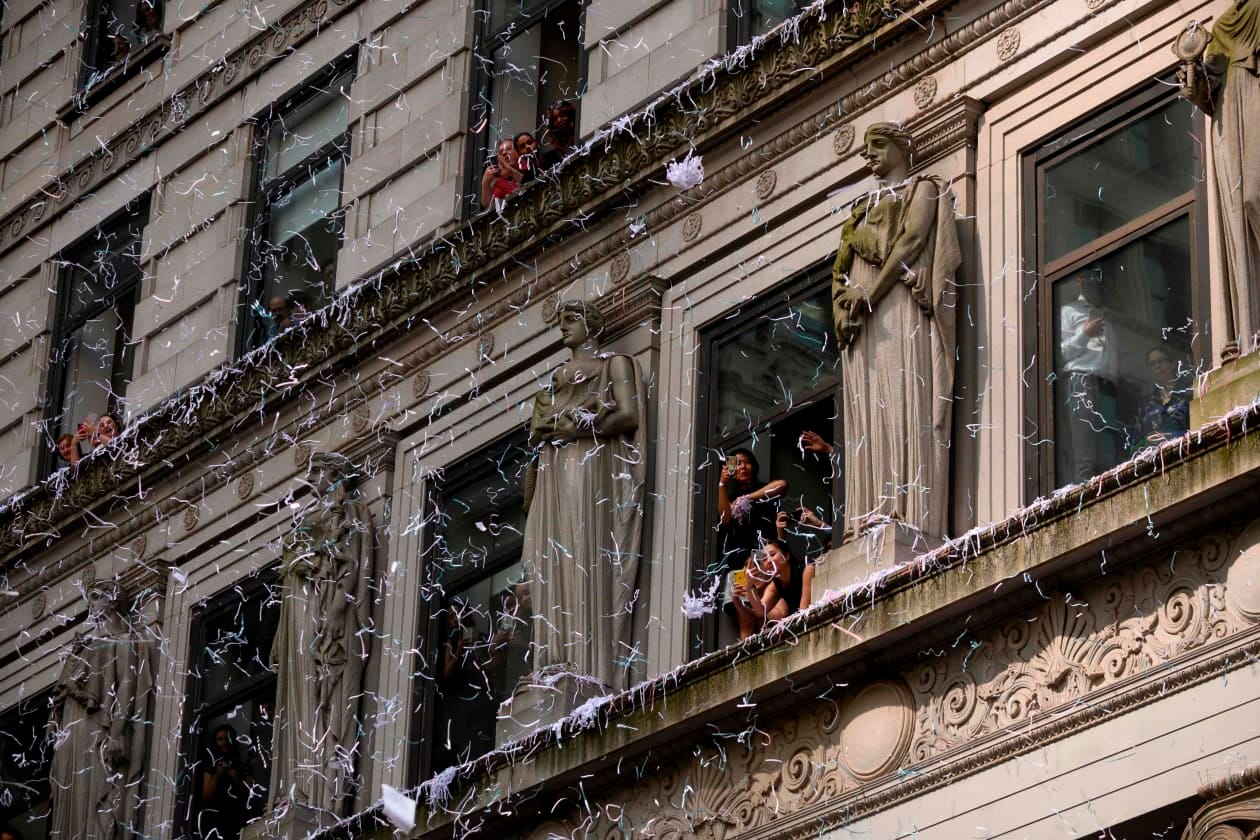
In general, the human urge to get a better view by being high up was on full display.
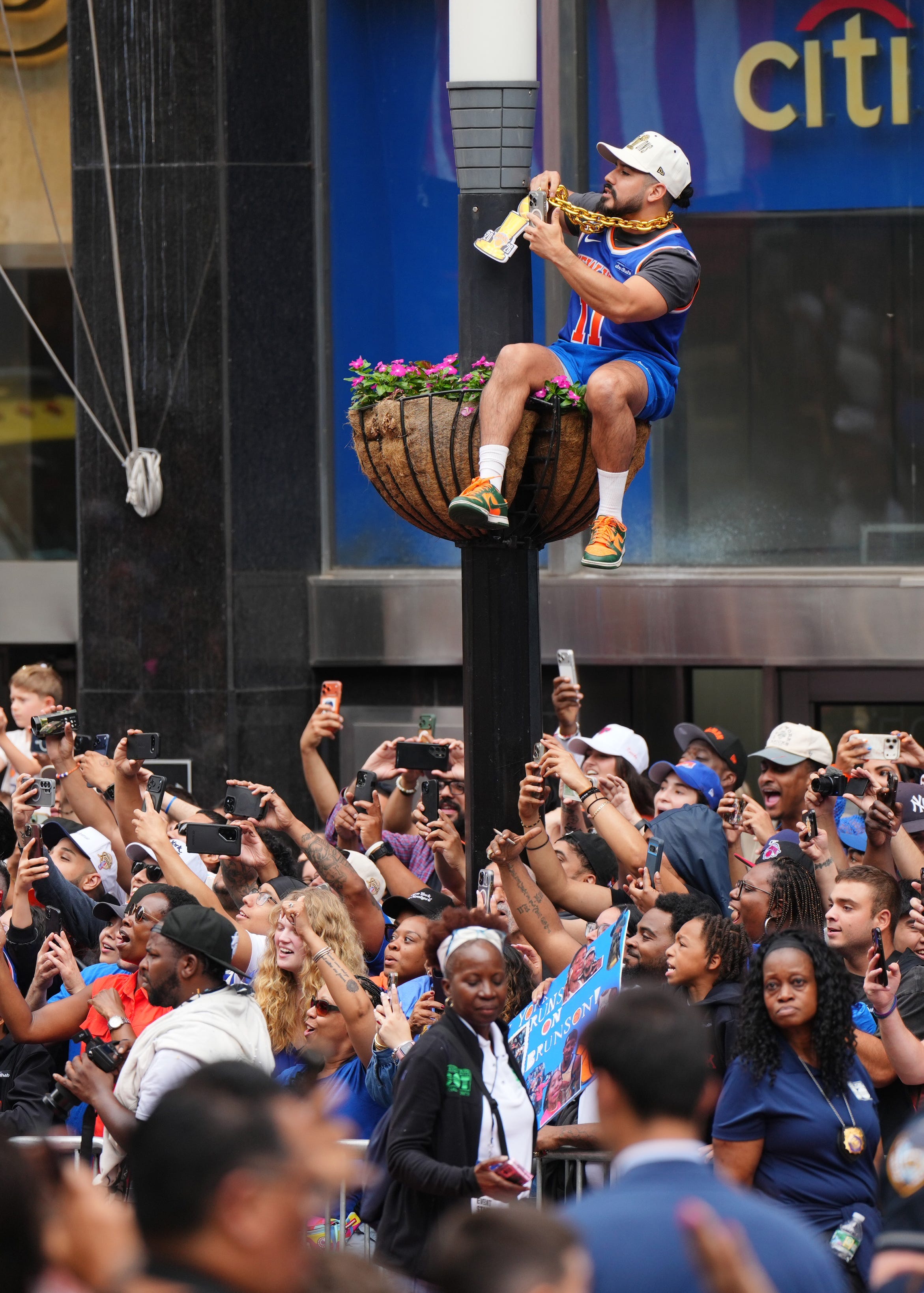
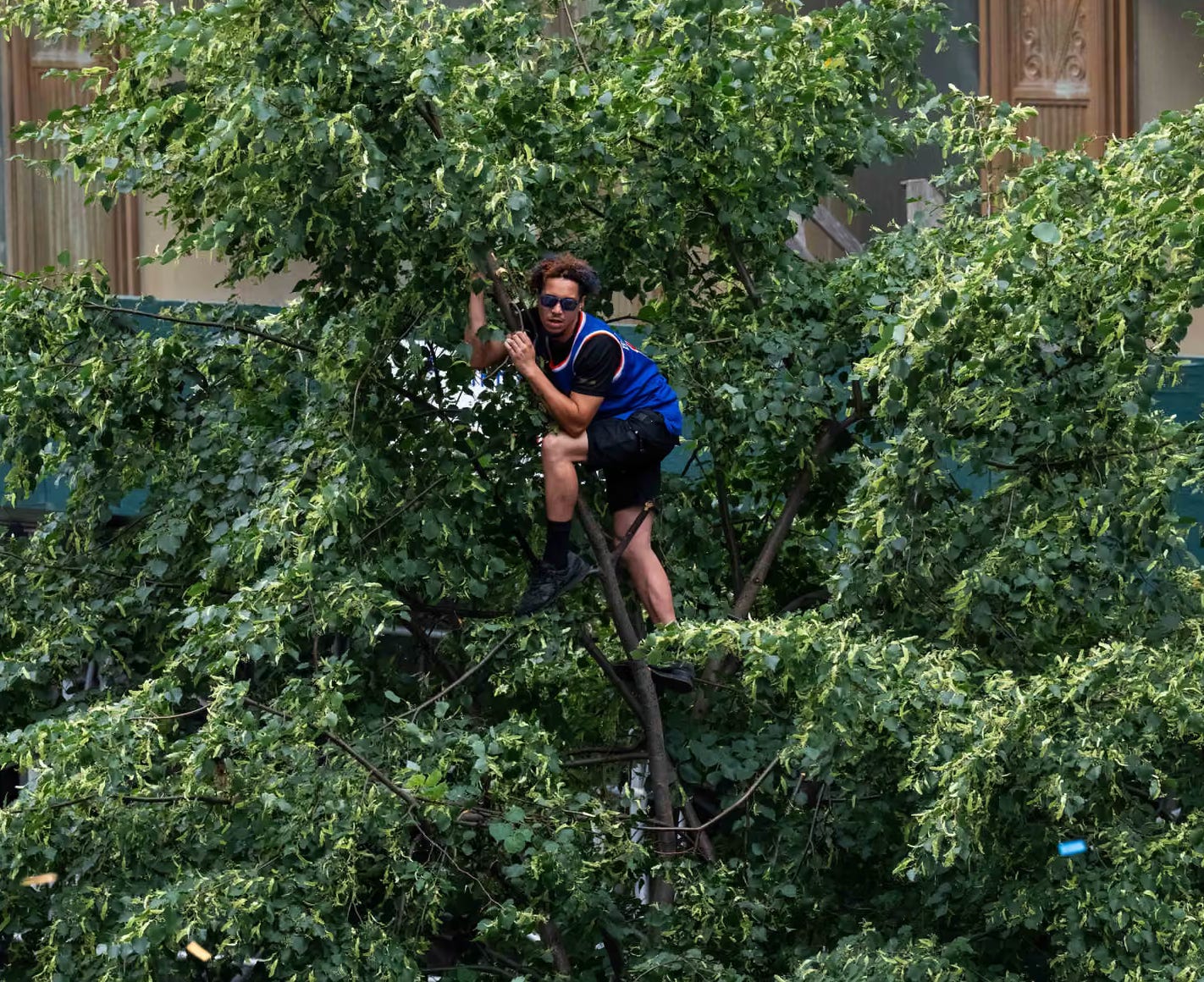
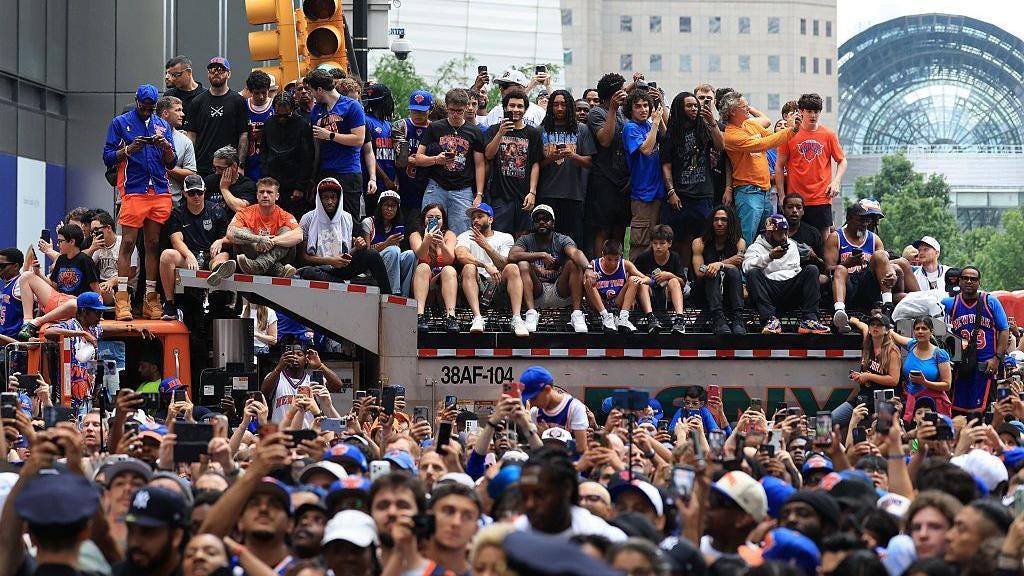
The second thing the route has going for it is that it is, well, an iconic part of New York City. Parades are about symbolism as much as anything, and the Knicks parade needs to happen in a part of the city that feels quintessentially New York. Having the Knicks cruise past the Wall Street Bull, Trinity Church, and into City Hall, with the skyscrapers of downtown looming all around, felt suitably iconic for an iconic moment.
As I turned over improvements in my mind, I looked at some other big celebrations. Below is a picture from 2018 when France won the World Cup. The Champs-Élysées provided a wide boulevard with plentiful windows and balconies onto the bus route, and the Arc de Triomphe, Élysée Palace, and Place de la Concorde provided the iconic landmarks.
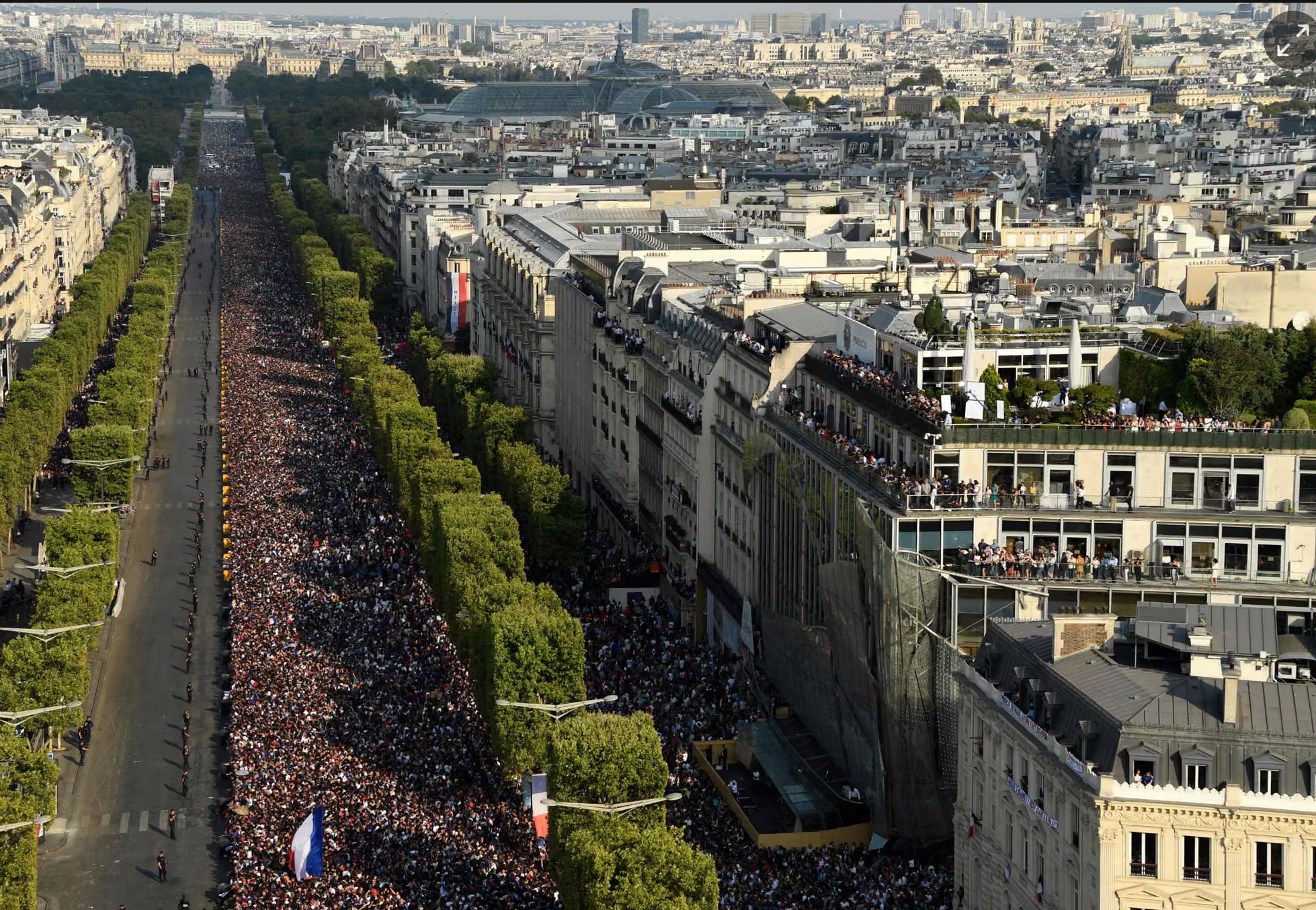
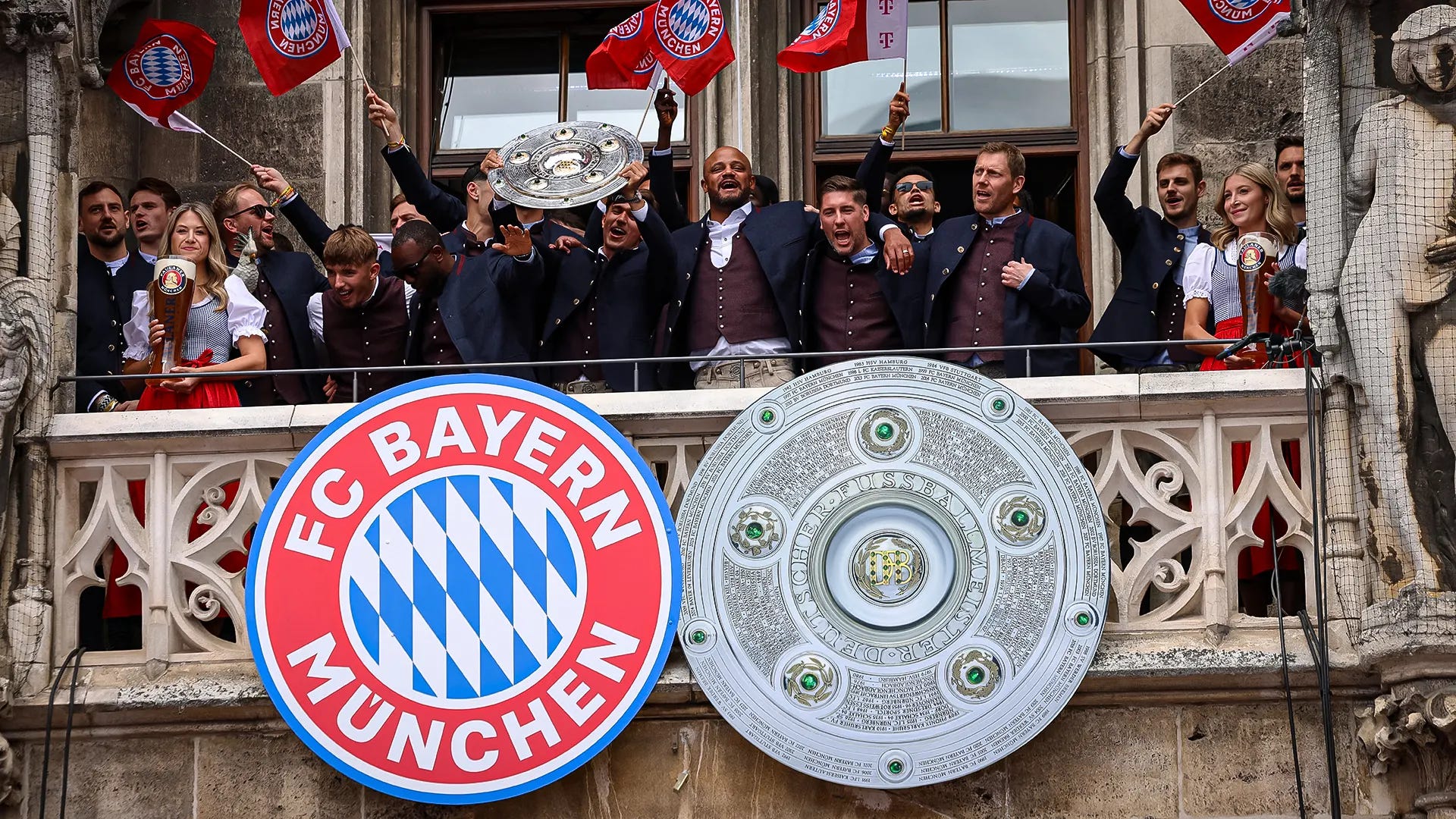
With all the people crammed onto balconies and climbing trees to get a better view, something else popped into my mind. What if it were the other way around? What if the trophy and team were elevated so that everyone down below could get a look at them? The German soccer giants Bayern Munich usually show off their silverware from the balcony of Munich’s town hall at the end of each season.
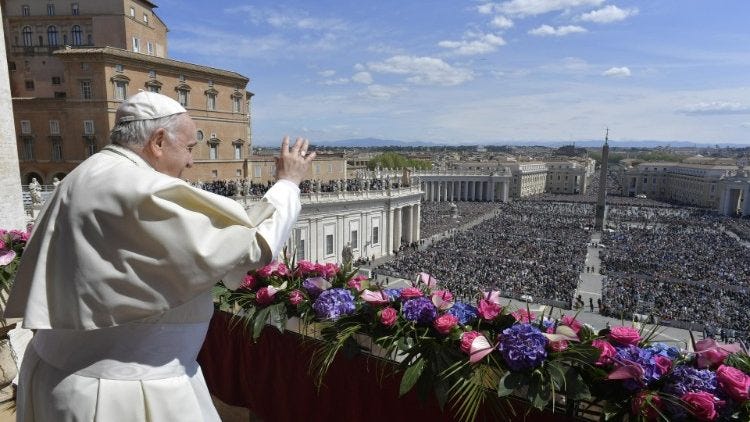
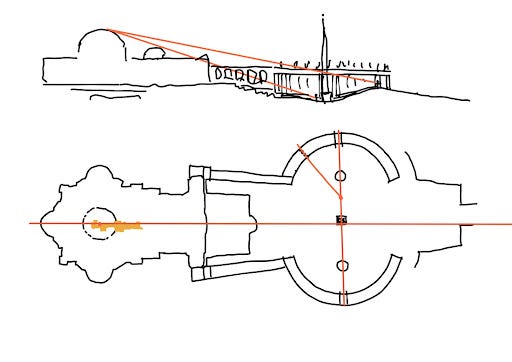
Weirdly, I was also reminded of (bear with me), the Pope. St Peter’s Square was basically designed to give thousands of people a clear sightline to the Loggia of Blessings, the balcony on the front of the Basilica where the Pope delivers sermons (Pope Leo says Knicks in 5). Where is the NYC equivalent?
The Fix
I got to five criteria for a good parade:
Ample pedestrian space
Tiered viewing opportunities
Proximity to landmarks
A large open space to accommodate the finishing ceremony
Safe queuing areas for orderly access
The most obvious place to stage a parade that meets all or some of these criteria is the route the City uses for several of its other parades — Fifth Avenue in Midtown.
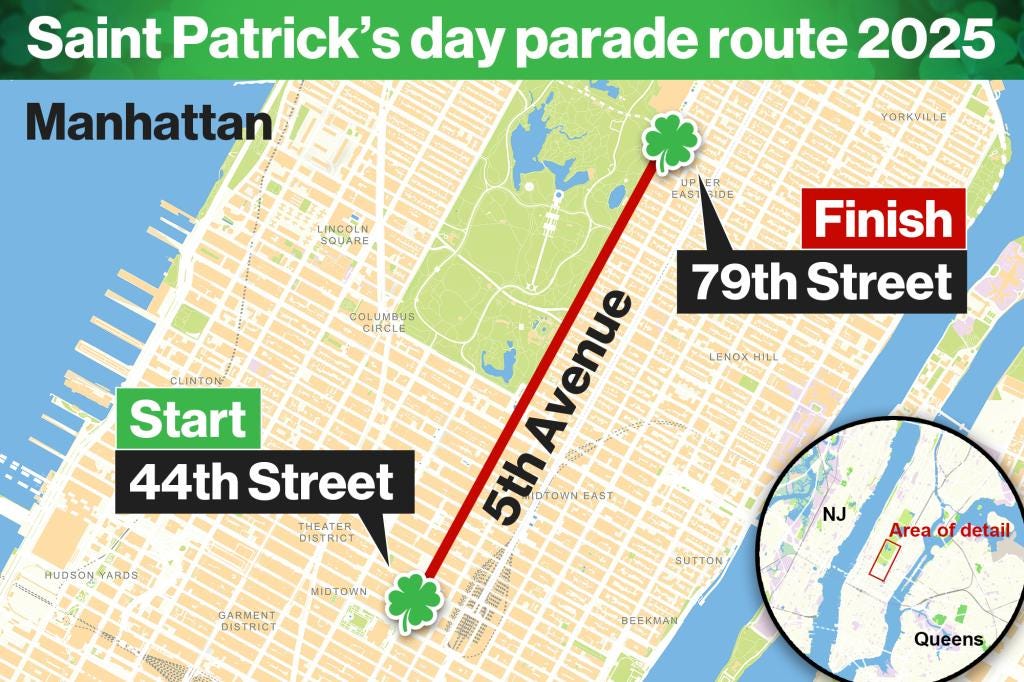
The Puerto Rican Day Parade and St. Patrick’s Day Parades both use this route. As I’ve mentioned, in addition to the avenue itself being quite wide, the sidewalks here provide more room than Broadway for viewing. The route also goes past Midtown’s iconic landmarks, St Patrick’s Cathedral, Rockefeller Center, and Grand Army Plaza.
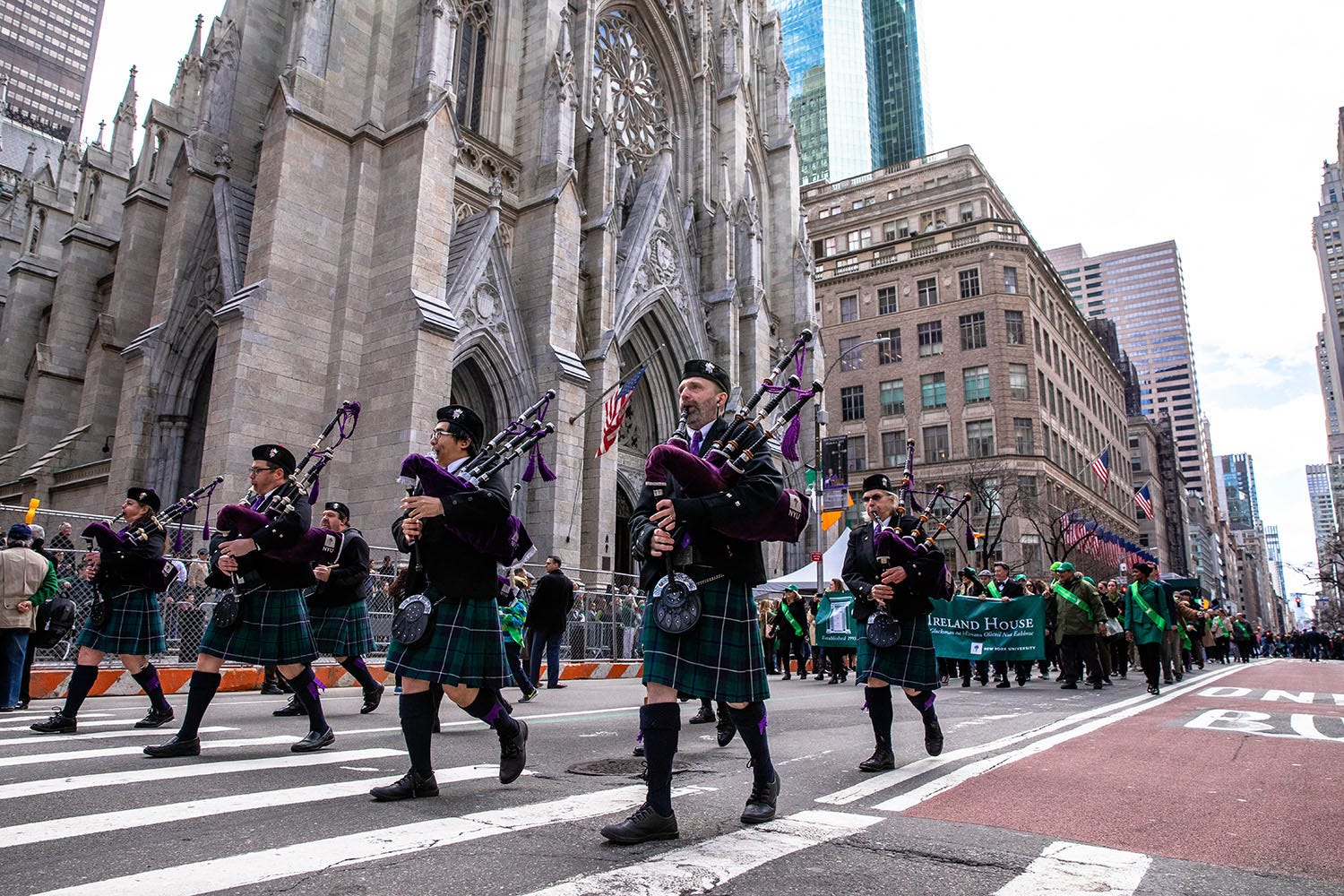
But long stretches of this route skirt Central Park, which lacks the tall buildings that provide elevated viewing opportunities. More pressingly. The route starts and ends at random streets, which is fine for those parades, but the Knicks parade needed to end at a venue suitable for speeches and key-giving. I decided to consider the fourth criterion, a large open space to accommodate the finishing ceremony, and reverse engineer the route out from there.
Unlike City Hall, the space for the ceremony needed to be big and easy to see
It should be surrounded by iconic architecture
It needed to have a significant hardscape or lawn space so a stage and viewing area could be set up.
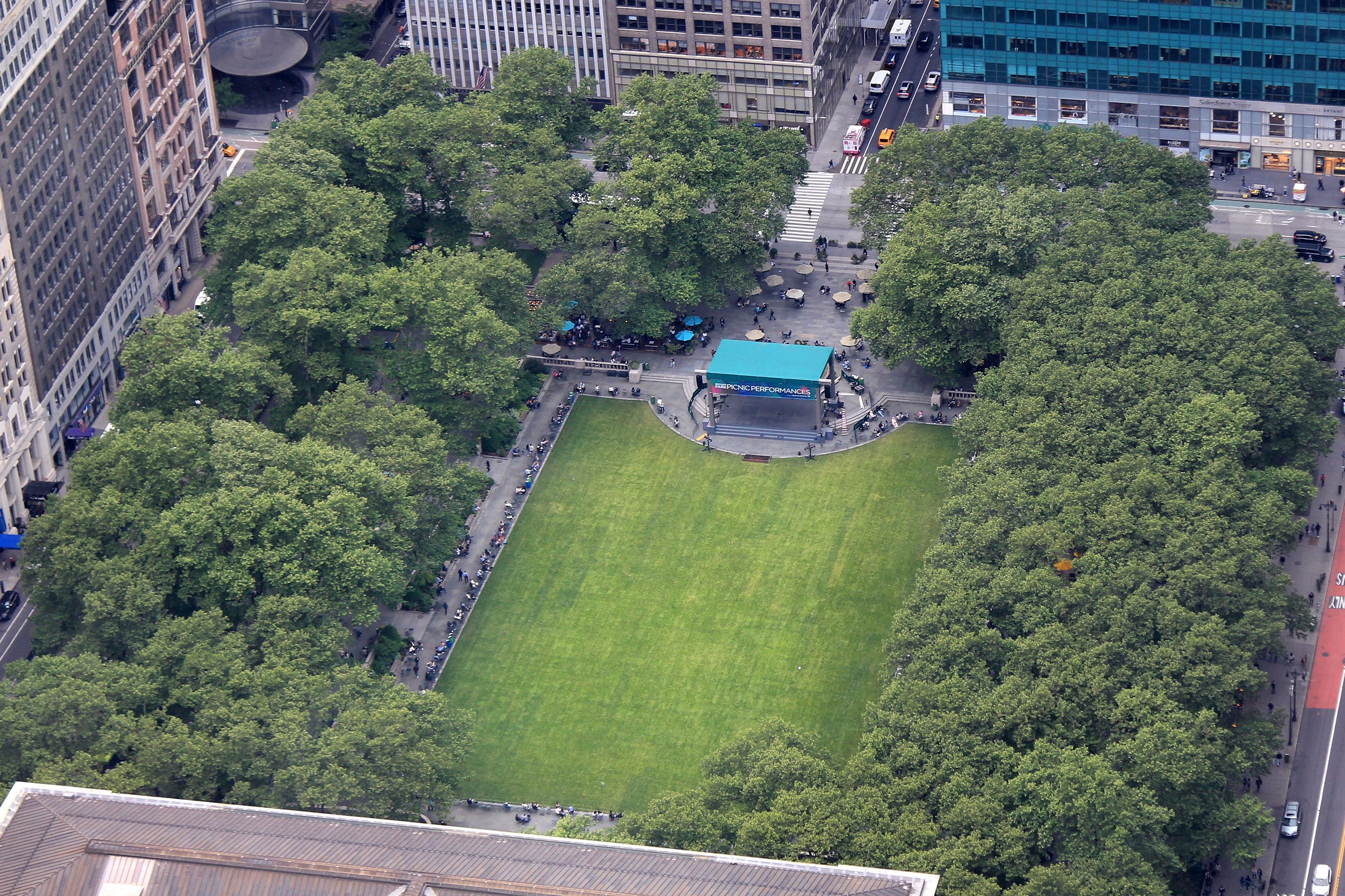
The last point rules out a lot of Manhattan’s open spaces. Places like Madison Square Park or Washington Square might be larger than City Hall, but they don’t have enough uninterrupted flat space to host a large ceremony. This led me to two options with ample flat space: Bryant Park and Union Square Park. I initially gravitated towards Bryant Park because of the backdrop of the NYPL main branch compared to the meh buildings that line Union Square.
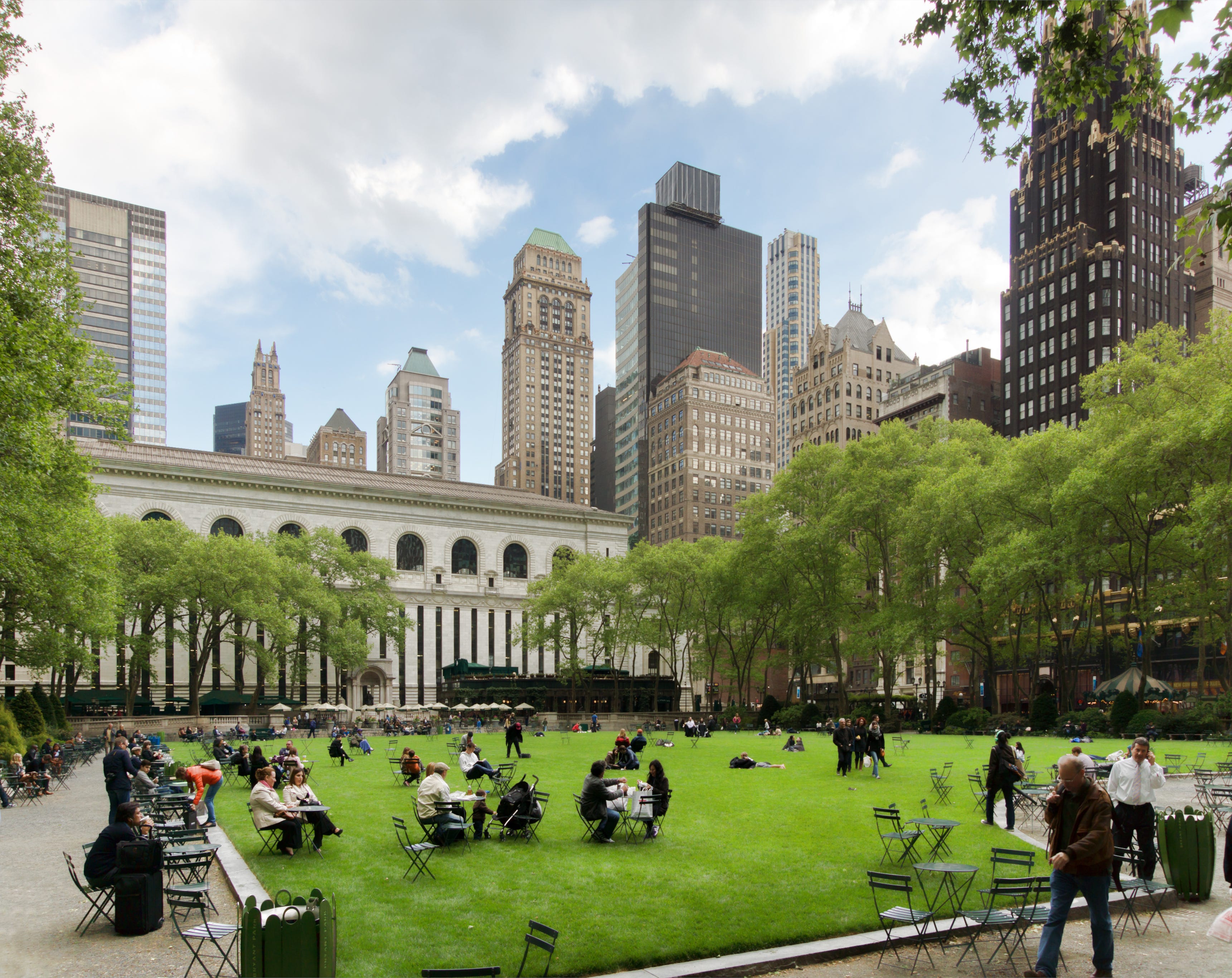
But considering the parade would happen in the summer with the trees fully leafed out, I figured Bryant’s ring of trees would block off views from the surrounding streets and buildings.
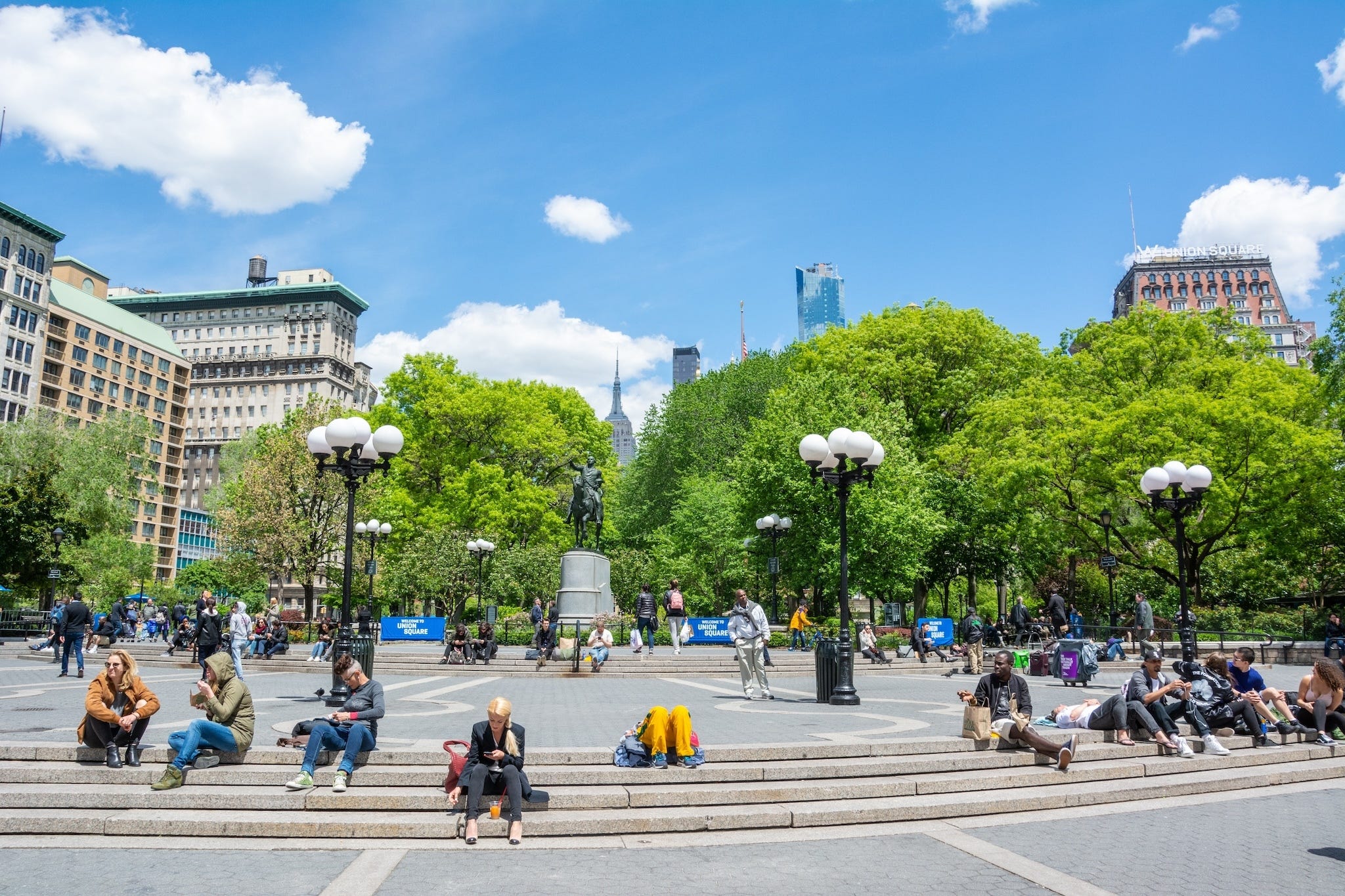
On the other hand, Union Square’s south-facing side is relatively unobstructed, and it’s also raised slightly above street level by nine steps (not exactly Loggia of the Blessings, but every foot counts).
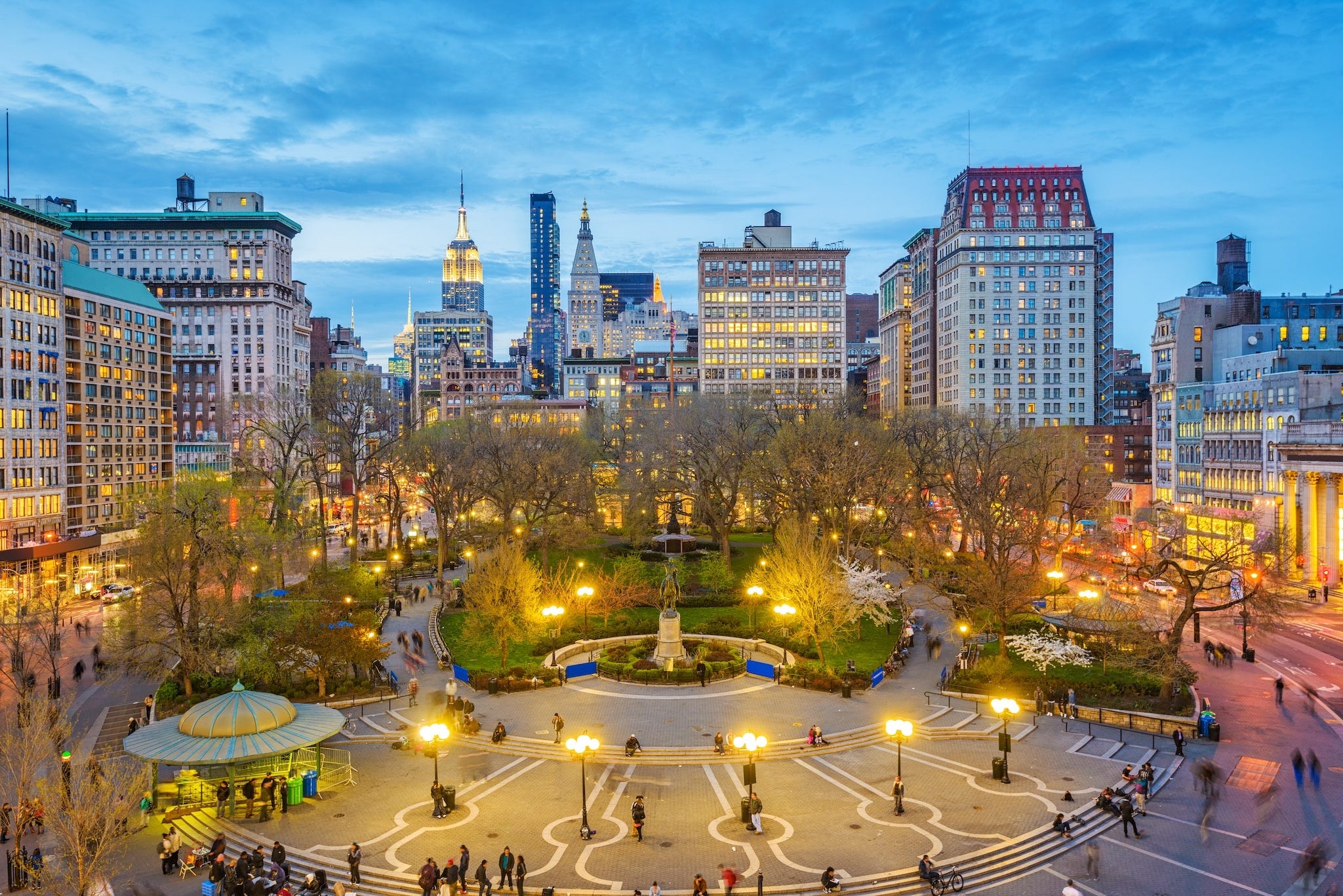
When I looked at photos of the square from different angles, I became more convinced that this should be the ceremony’s location. Imagine the Knicks arrayed on a platform under the equestrian statue of Washington with the Empire State Building lit up orange and blue in the background.
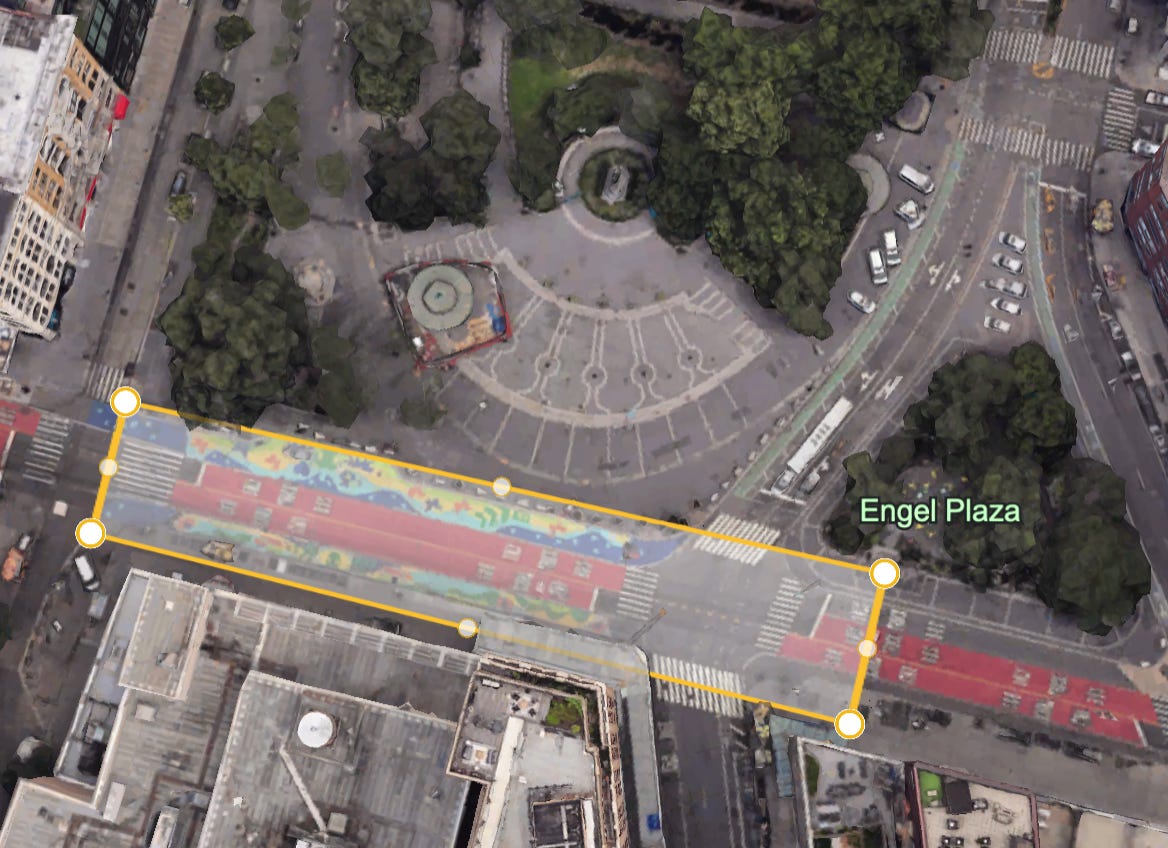
Assuming most of the plaza in front of the statue would be seating for invited guests and officials, 14th Street, directly in front of Union Square, could be easily converted into a huge public viewing area. Suspending crosstown bus service on the morning of the parade would free up the 14th Street dedicated busway here and create a roughly 350x75-foot area for the public to gather and view the ceremony, without even intruding on the plaza itself. Suspending bus service isn’t that far-fetched, considering subway service downtown was mostly suspended for the real parade.
With this as the endpoint, gazing over Midtown on Google Earth, an idea jumped out: a procession from Madison Square Garden to Union Square.
I’d considered having the parade end at Madison Square Garden, the Knicks home area. But hosting the ceremony inside MSG, a private indoor stadium, seemed to dull the civic nature of the celebration. Also, while I love MSG… It’s kind of ugly. Starting the parade there makes much more sense. Imagine the trophy emerging from the Knicks’ home arena and into the wide avenues of Midtown. Here is the route I propose connecting MSG to Union Square.
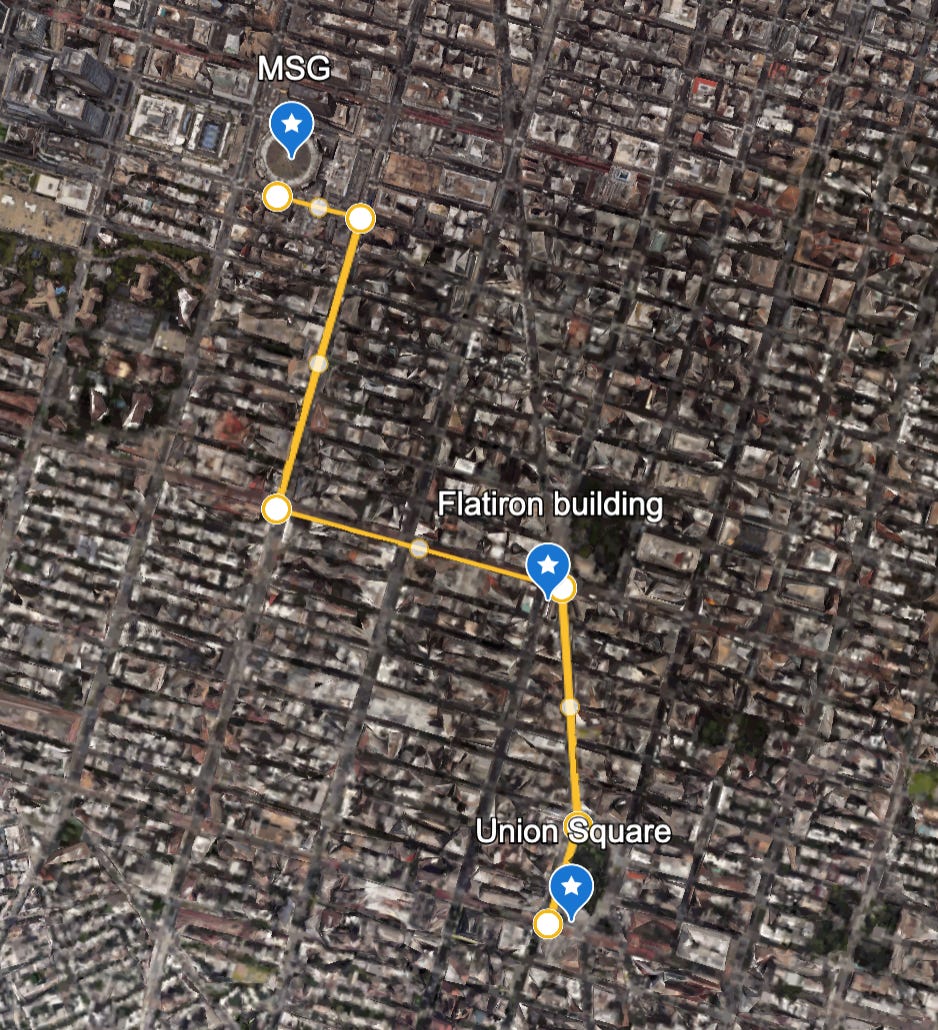
A route with this many turns would be a challenge for a parade with thousands of participants, but a Championship parade is a fairly maneuverable affair, a few buses with a handful of players, coaches, and family. The route travels south from MSG on 7th Avenue before turning east on 23rd Street. Both these streets are among the city’s widest, each roughly 100 feet across. Assuming three traffic lanes are kept open on each street for floats, buses, emergency vehicles, and a general buffer, there would still be ample room on each side to cram in spectators.
After moving east on 23rd Street, the parade would curl around the Flatiron building, a chance to include another NYC landmark, and pass along Flatiron Plaza, which could be set up with bleacher seating to watch the parade make the turn onto Broadway.
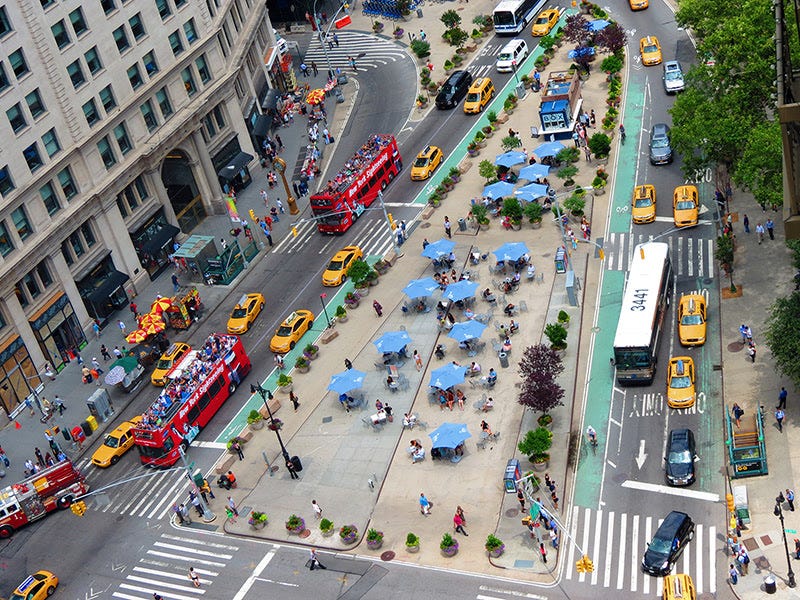
From this intersection, I debated between having the parade go straight down 5th Avenue or onto Broadway. Much of Broadway between Madison Square Park and Union Square has been pedestrianized as part of the City’s Broadway Vision plan.
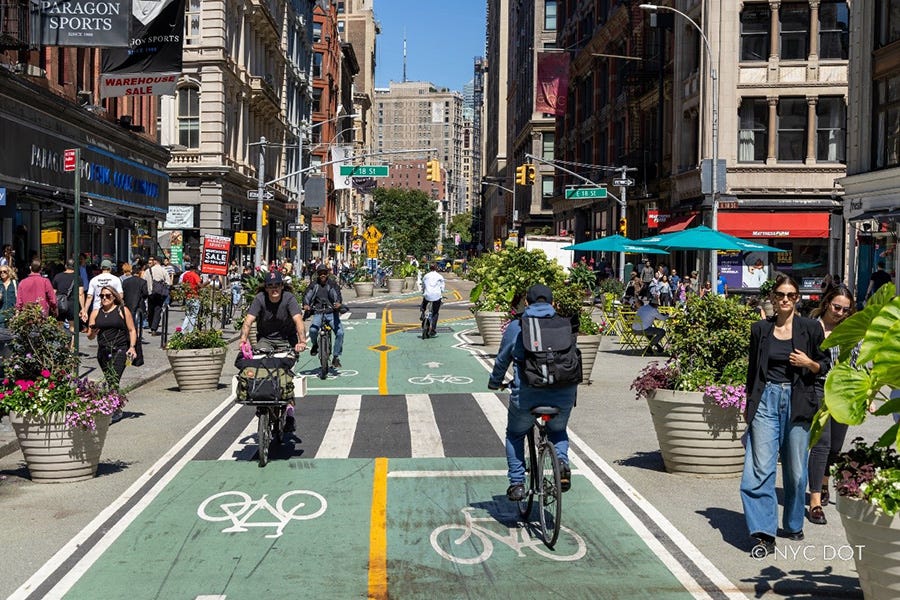
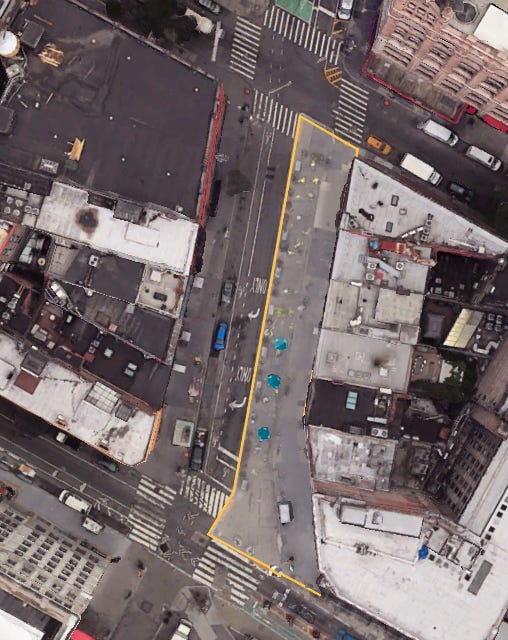
What this means is that there is a lot of “stuff” in the road here. Planters, cafes, and bollards would all need to be moved to make room for the parade. There’s no doubt this would be a lot of work. The advantage is that Broadway runs directly into Union Square, and more importantly, all the pedestrian space the City has spent the last few years installing would lend itself naturally to viewing. Again, the road space requirements for this parade are pretty minimal — the width of one bus and some buffer room/emergency access. Below is the block of Broadway just north of Union Square viewed from above. The area highlighted in yellow is a pedestrian area with cafe tables, so although the literal sidewalks here might not be that wide, there is much more room to play with for spectating.
What better showcase of the city’s pedestrian infrastructure than hosting two million people? For the actual parade, the City effectively banned parking and driving south of City Hall. A parade that included the pedestrianized spaces around Flatiron, Broadway, and Union Square would be a chance to prove that removing cars creates opportunity for pedestrian life, both the everyday kind and spectacular one-offs. Hopefully, this time next year, we’re doing this all over again with some tweaks.
When I read the words, “how could this be better?” I knew I was in for a Street Stack treat. City of New York! Hire Matt Choi to plan all parades! (And of course parades have a history, e.g. Sebastian Jobs, Welcome Home, Boys!: Military Victory Parades in New York City, 1899-1946.)
Ok, Send this to Mr. Mamdani and you've got yourself a job!