
Death from Above

In 1911, an Italian named Giulio Gavotti threw four grenades at a camp of Turkish soldiers from a plane with canvas wings in what is considered to be history’s first aerial bombing. People had been lobbing rocks and explosives at cities for hundreds of years, but a milestone was achieved the next year when a plane dropped two bombs on Edirne in what was then Ottoman Turkey. The wedding between flying machine, bomb, and city has only grown stronger from then on.
It’s not exactly the first thing your friends tell you when they get back from vacation, but coming from a relatively war-free place, I’m always taken aback at how obviously bomb-scarred many modern cities are. In London, you wonder why the preservation mad Brits allow a shiny new glass office tower to exist in the Square Mile, but then you realize that pretty much everything new (ish) from the Barbican to the Cheese Grater is plugging a hole left by a German bomb or rocket, and that the gashes on the facades of the V&A and the pock marks on the Victoria Embankment are from shrapnel. On the other side of the War, Berlin is essentially a city of plugged holes. A facade will be one style of architecture, then switch suddenly to another, much older style, where some piece of a building survived the end of the war.
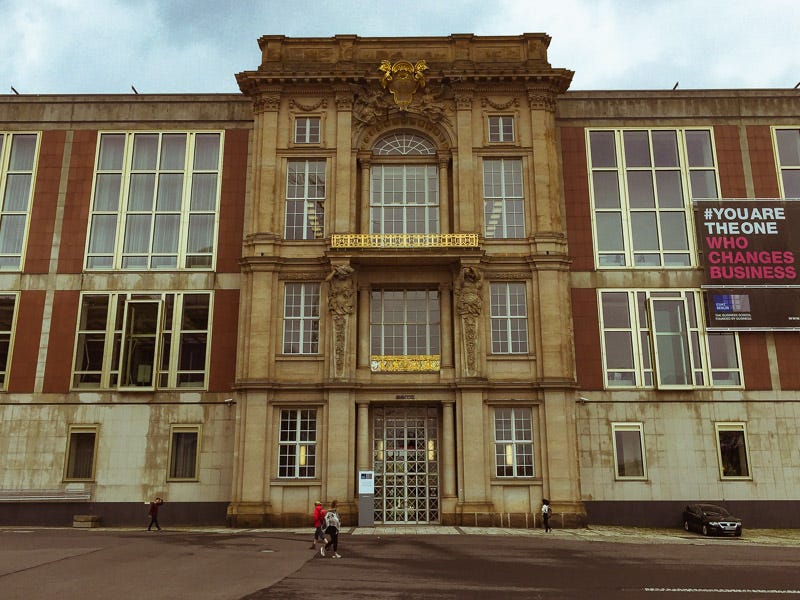
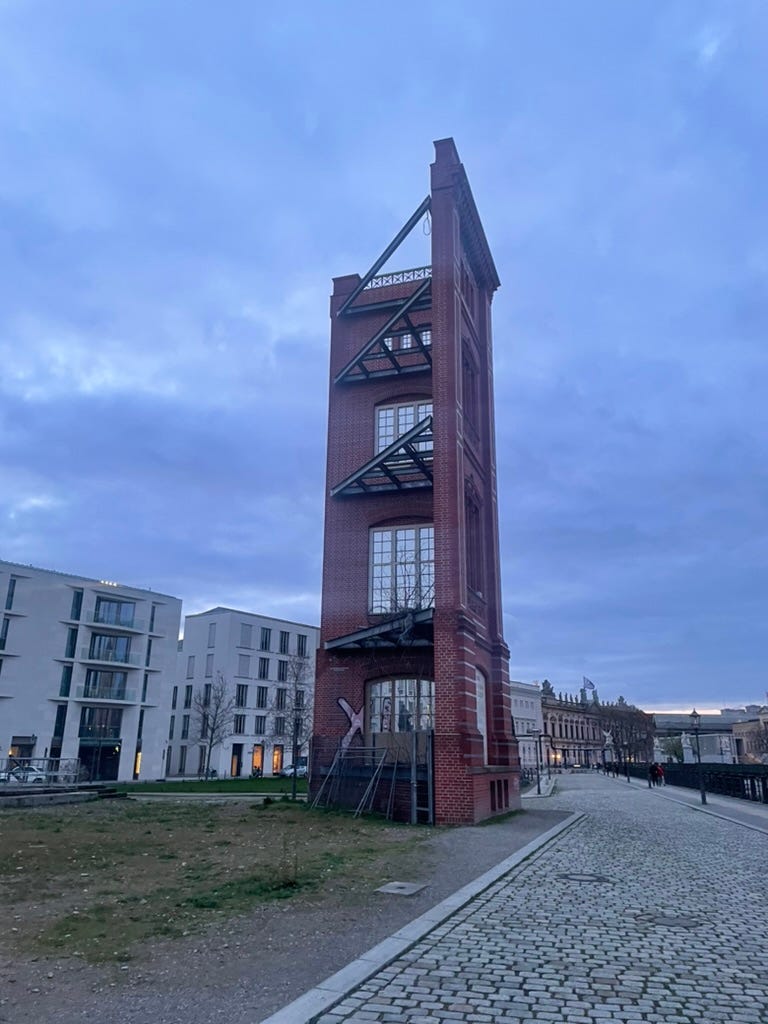
Seoul and Tokyo, where I was this past summer, were so completely leveled by bombs that they lack reminders of their destruction, a clean slate. But that lack of anything old is its own giveaway.
If this is the current state of these places, it makes you wonder what the trajectory of today’s victims will be. Tyre, Beirut, Tehran, Jerusalem, and Kiev with more than 10,000 years of continuous human habitation between them, the homes of Europa, Darius, and David rained on by a parade of innovative modern delivery methods for death. And very new cities too, Abu Dhabi, Dubai, and Doha, made up of towers and jewel-like museums that have been every large architecture firm’s bread and butter for the last 20 years, glass balloons ready to be popped.
For the past week, I have been mainlining Al Jazeera and the New York Times: Multiple explosions heard in Tehran, Residents in relevant areas have received a mobile phone alert, Mass evacuation orders for southern Lebanon. The IDF tweets maps of the parts of Beirut it plans to bomb later in the day with little graphics and arrows. If you squint, it has the feeling of a morning weather report. But there is a stunning density of life and human experience in a random suburb. Two of the most affecting clips I watched were of people fleeing the streets of Tel Aviv at an air raid siren. “There is no terror in the bang, only in the anticipation of it,” Hitchcock once said, and this is surely a clip of sheer terror. I admit, I can’t fathom how a society that has to endure this so eagerly propagates violence abroad. Lebanese families are leaving their homes without turning off the tea kettles and sleeping in the streets as they flee north out of the red zones on the IDF’s tweeted maps.
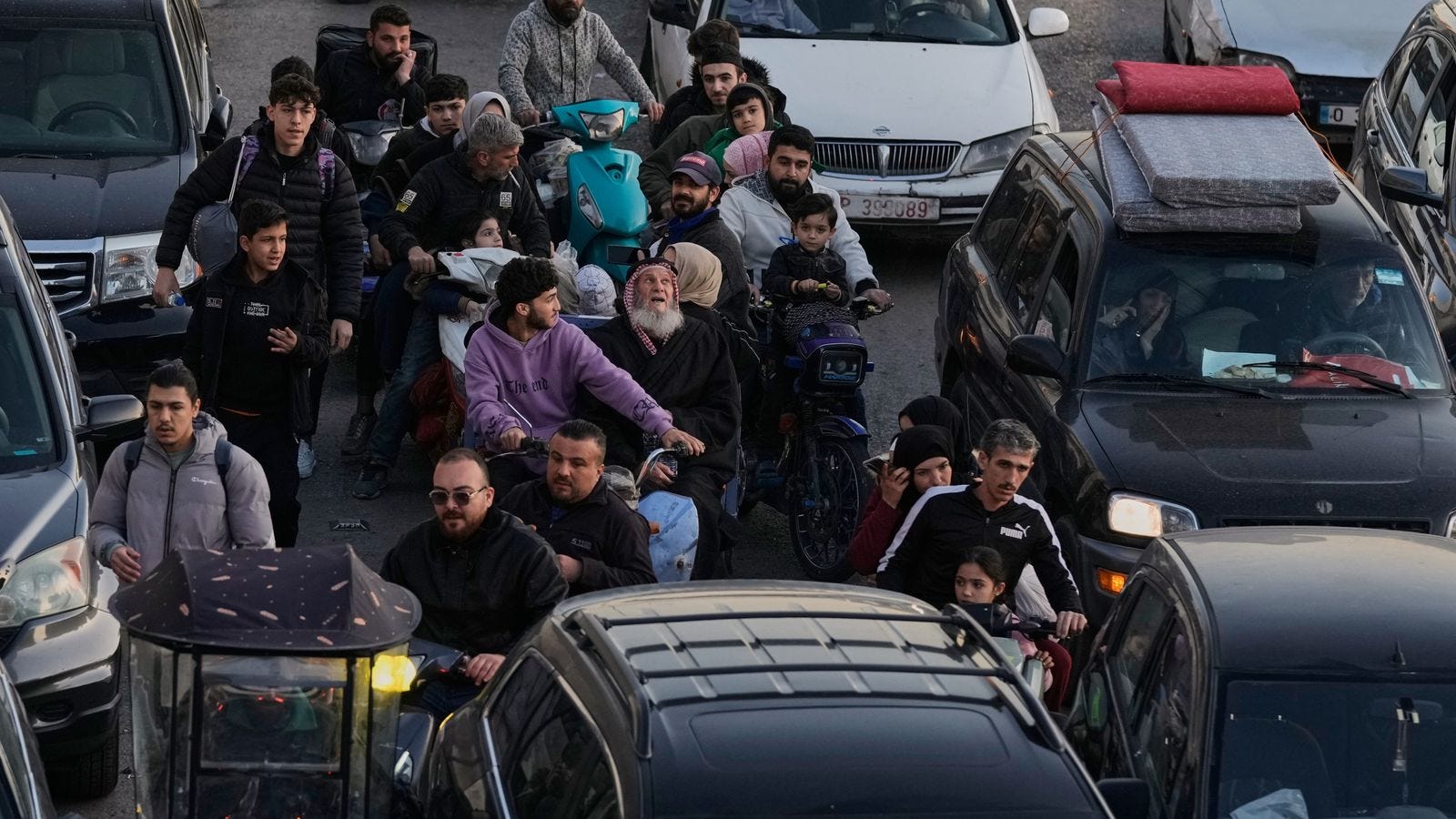
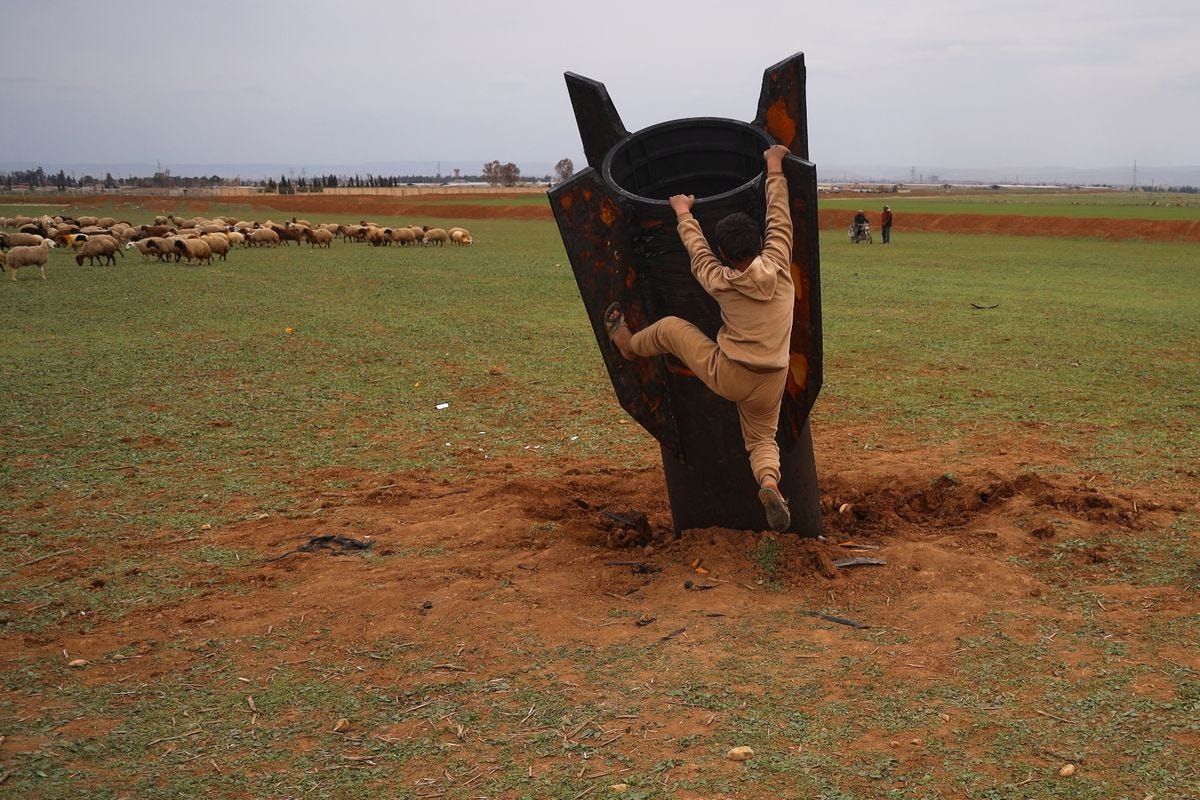
I am saddened but not surprised at the callousness here in the US. For many of the the 99% of Americans who do not serve in the military, we feel war as a dark mood and pain at the pump, not as an immediate kinetic force. We are on an island far away. There have been few anti-war demonstrations here, certainly not on the scale of what happened during Iraq. Our frame of reference for conflict hasn’t evolved with the times. As long as we’re not landing on beaches or rolling tanks through the streets, it can’t be that bad. The bombing of cities somehow no longer feels like “real ”war.
But I have been projecting the war’s geography onto my own city. “Analysis Suggests School Was Hit Amid U.S. Strikes on Iranian Naval Base,” the Times writes in its detached, blameless tone. My former high school is as close to an army base in Bay Ridge as the Shajarah Tayyebeh Primary School is to that naval base. My father was the first parent to arrive at my elementary school on 9/11. I remember walking home with him and seeing a mail truck with the back door wide open, packages littered across the sidewalk, the driver and deliveryman unaware of their cargo sitting glued to the radio in the truck’s cab. That’s my crystal clear memory of the day, after that, everything is fuzzy until the memorial service for my friend’s dad.
It takes an incredible amount of effort and life to create even a dysfunctional city, and relatively little effort to destroy one. We are the only species that lives like this, and the only one that regularly erases its own creations. “The southern suburbs (of Beirut) will become like Khan Younis,” Israeli Minister Bezalel Smotrich recently said, referencing the Palestinian city Israel largely flattened last year. Indulge me one quote from Genesis: “If I find fifty righteous people in the city of Sodom, I will spare the whole place for their sake,” God told Abraham, who replied, “Let me speak just once more. What if only ten can be found there? He answered, “For the sake of ten, I would not destroy it.”
Thank you for this moving post about cities, destruction, and the seeming distance of a so-called aerial war versus "boots on the ground," unless you're the one living on that ground. As for rebuilding, I recently visited beautiful Saint Malo, in the Brittany region of France, only to learn that what looks and feels like an ancient city was in fact rebuilt after World War II . . . to look and feel like an ancient city. I found this to be quite a striking architectural and historical phenomenon.
Thanks for your keen eye and observations.